
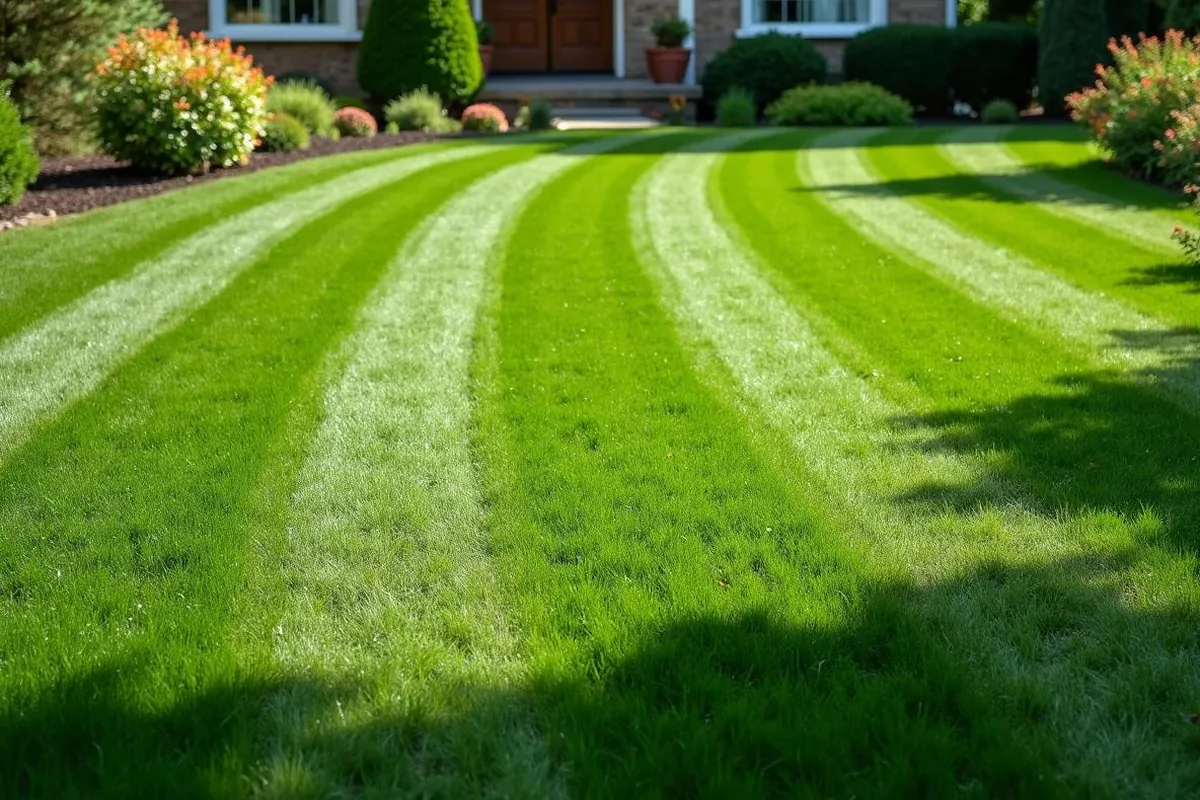
The single most common question new clients ask us is: how often should my lawn be mowed?
The honest answer is that there's no single number. A Louisville lawn in mid-May grows fast enough to want cutting every five days. That same lawn in mid-August, during a drought, might not need cutting for three weeks. The right schedule follows the grass, not the calendar.
Here's a realistic season-by-season for Louisville — specifically for the East End neighborhoods where our clients live: St. Matthews, Windy Hills, Crescent Hill, Indian Hills, and the surrounding area.
Late March to early April: transition
The grass is waking up but not aggressive yet. Most lawns need one or two cuts in this window — mostly to clean up winter debris, knock down the tallest patches, and get a fresh line on the edges before spring really pushes.
If your lawn was cut short before winter, this is also the time to check that you're not scalping fresh growth. Cutting too short in early spring stresses the plant right when it needs energy to establish.
Mid-April to late May: peak growth
Weekly cutting, sometimes even every five days for the fastest-growing lawns. This is when cool-season grasses (fescue, Kentucky bluegrass — what most Louisville East End lawns are) are pushing their hardest. If you skip a week during peak growth, you'll be cutting off more than a third of the blade the next time, which is bad for the grass and bad for the mower.
Mowing height matters. Cut too short and you invite weeds and heat stress; cut too high and you look unkempt. For fescue lawns, 3.5–4 inches is our default. Kentucky bluegrass tolerates slightly shorter, but not by much.
June to mid-July: still weekly if watered, maybe not if not
This is the transition into summer heat. If you have irrigation and you're watering deeply once or twice a week, the lawn keeps growing and weekly mowing continues. If you're not watering, growth slows down and bi-weekly is often enough.
Louisville's summers are hot enough that non-irrigated fescue lawns go dormant. Dormant grass looks tan or brown; it's not dead, just resting. Mowing dormant grass is worse than skipping. You're just cutting dry blades and stressing an already-stressed plant.
We don't charge for cuts we don't make. If we come out during a drought and the lawn doesn't need it, we skip.
Mid-July to late August: variable
This is the most schedule-dependent stretch of the year. Wet weeks push growth; dry weeks stop it. Some clients get cut every week; some get skipped multiple times in a row.
The signal we watch: grass color and blade length. If the lawn is holding green and the blades are past our target mowing height, we cut. If it's tan and short, we skip.
September to mid-October: second growth burst
Cool-season grasses love September. Cooler nights, more moisture, less stress. Fescue lawns push a genuine second growth burst — sometimes as strong as May's spring push.
Weekly cutting is back for most lawns. This is also when we're often overseeding, top-dressing, or doing landscape refresh work on top of the mowing schedule.
Late October through November: taper
Growth slows. Cutting drops to bi-weekly, then on-call. The last cut of the year is usually mid-to-late November, taken slightly shorter than usual (about 3 inches for fescue) to reduce winter matting and disease risk.
Then it's leaf cleanup season through late November and into early December.
The wrong way to schedule mowing
The wrong approach is a rigid "every seven days from April to October, then done." That schedule will:
- Charge you for cuts you don't need in July droughts.
- Skip cuts you do need in September's growth push.
- Never adjust for the actual weather that year.
The right approach is a base schedule (usually weekly), with the flexibility to skip when the grass doesn't need it and add when it does. That's what we do.
Getting on our schedule
If you're evaluating lawn care in Louisville and want a service that actually pays attention to your grass, request a free estimate or call (502) 762-8817.
We serve the Louisville East End — St. Matthews, Windy Hills, Crescent Hill, Indian Hills, Rolling Fields, Anchorage, Prospect, and the surrounding Louisville East End neighborhoods. If you're in that area, we can usually add you within a week or two of the initial conversation.